Company begins MI455 shipments, plans Korea AI research center by year-end
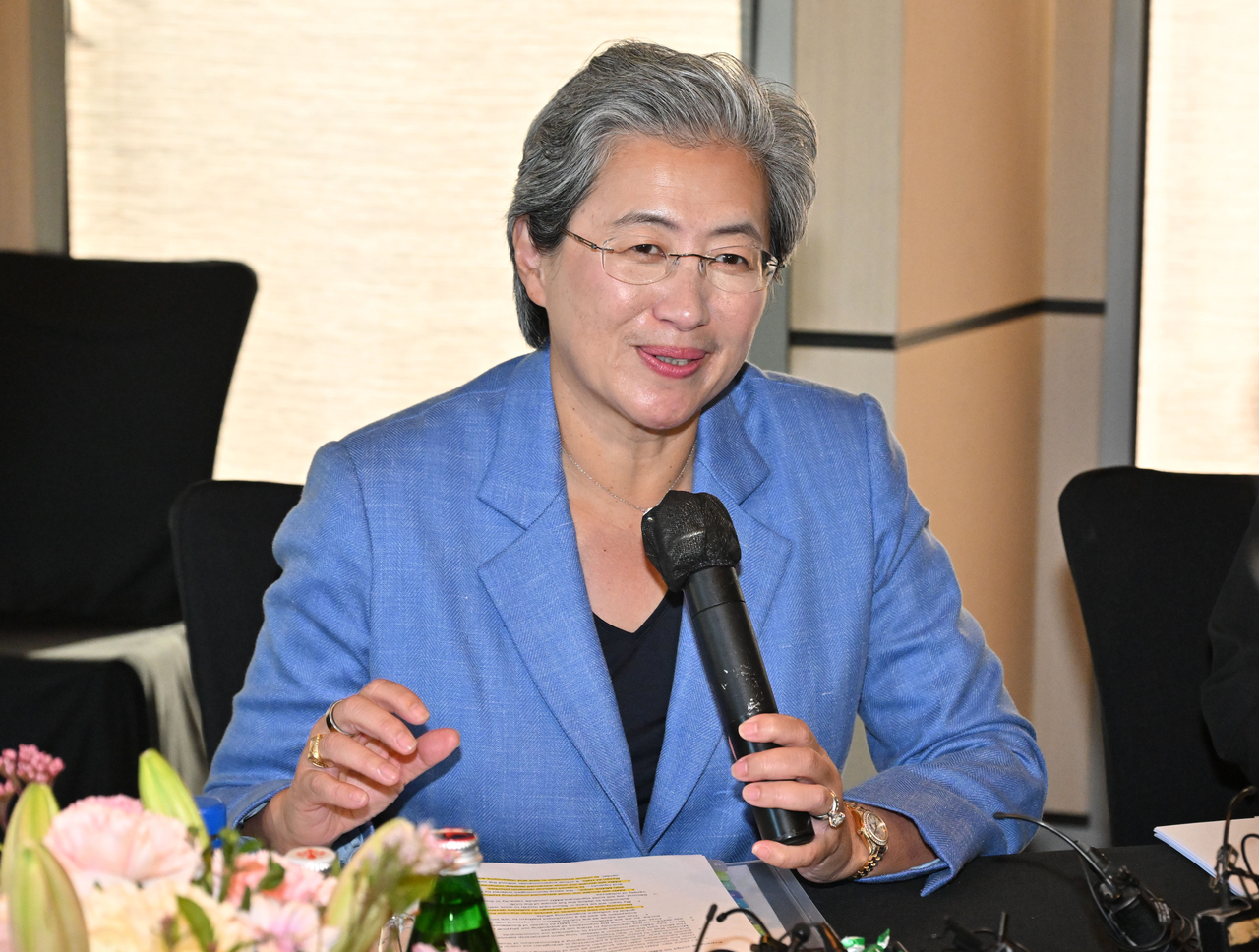
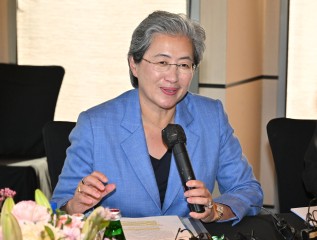
AMD Chair and CEO Lisa Su doubled down on the chipmaker’s ties with Samsung Electronics and SK hynix during her Seoul visit Wednesday, as the company leans on the Korean memory giants to power its expanding AI push.
Calling semiconductors a “team sport,” Su said AMD has begun shipping its next-generation MI455 accelerators and Helios systems using HBM4 memory from Samsung and SK hynix.
“Semiconductors is a team sport. A team sport means there’s tremendous collaboration,” Su said at a press briefing after AMD’s Gamer Day event.
Su held separate meetings Wednesday with Samsung Electronics Vice Chairman Jun Young-hyun, who heads its semiconductor business, and SK hynix CEO Kwak Noh-jung, according to industry officials.
“We have gotten great support from both Samsung and SK hynix, and we view the partnerships on HBM not just as one generation but really multiple generations,” Su said.
The meetings underscore the growing importance of Korea’s two memory leaders to AMD as it ramps up its challenge to Nvidia in AI computing.
Samsung and SK hynix are major suppliers of high-bandwidth memory, a critical component in AI accelerators. Su noted that AMD was the first company to bring HBM into production in 2015.
During her previous visit in March, Su met Samsung Electronics Chairman Lee Jae-yong and signed a cooperation agreement with Jun. AMD later named Samsung a preferred HBM4 supplier for its MI455X AI accelerator, while the two companies also explored potential foundry cooperation.
Asked Wednesday whether AMD would use Samsung’s foundry services to manufacture its chips, Su stopped short of confirming specific plans, saying AMD was seeking to broaden its supply chain.
“I think Samsung is a great partner in many areas, and we continue to explore opportunities with them,” she said.
Su’s talks with the Korean memory makers were part of a broader push to deepen AMD’s artificial intelligence ecosystem in Korea.
Earlier Wednesday, she met Second Vice Science Minister Ryu Je-myung and executives from 13 Korean AI companies to discuss pairing AMD CPUs and GPUs with locally developed neural processing units designed for AI inference.
The proposed systems would be tested through demonstration projects in Korea, with the goal of developing a blueprint for deployment in overseas markets. Such partnerships could broaden AMD’s inference offerings while giving Korean AI chipmakers a route to global customers.
“I am a big believer in an open ecosystem,” Su said, describing Korea as an important partner in advancing AI and expanding its adoption worldwide.
The discussions also covered potential participation by Korean companies in AMD’s open-source ROCm software ecosystem, which competes with Nvidia’s CUDA platform. The move reflects intensifying competition in AI computing beyond individual chips to entire systems encompassing processors, software and cloud infrastructure.
Ryu said combining AMD’s global reach with Korean companies’ technological capabilities could create new AI technologies and businesses while supporting the overseas expansion of Korea’s AI chip industry.
The talks build on a cooperation agreement AMD and the Science Ministry signed in July during President Lee Jae Myung’s visit to an AI summit in San Francisco.
Su also reaffirmed AMD’s plan to establish an AI Center for Excellence in Korea by year-end and hire hundreds of researchers. AMD will provide hardware for the center, whose location has yet to be selected, according to the ministry. The company will also continue supporting graduate-level AI training.
AMD is also expanding its ties with Korean startups and universities. Su cited the company’s first local cloud infrastructure project with MangoBoost and a recent agreement with Seoul National University’s AI Institute.
The roundtable brought together companies spanning AI chips, software and cloud services, including FuriosaAI, HyperAccel, DeepX, Mobilint, MangoBoost, Panmnesia, Dnotitia, Moreh, Nota AI, Lablup, Fadu, Elice Group and Upstage.
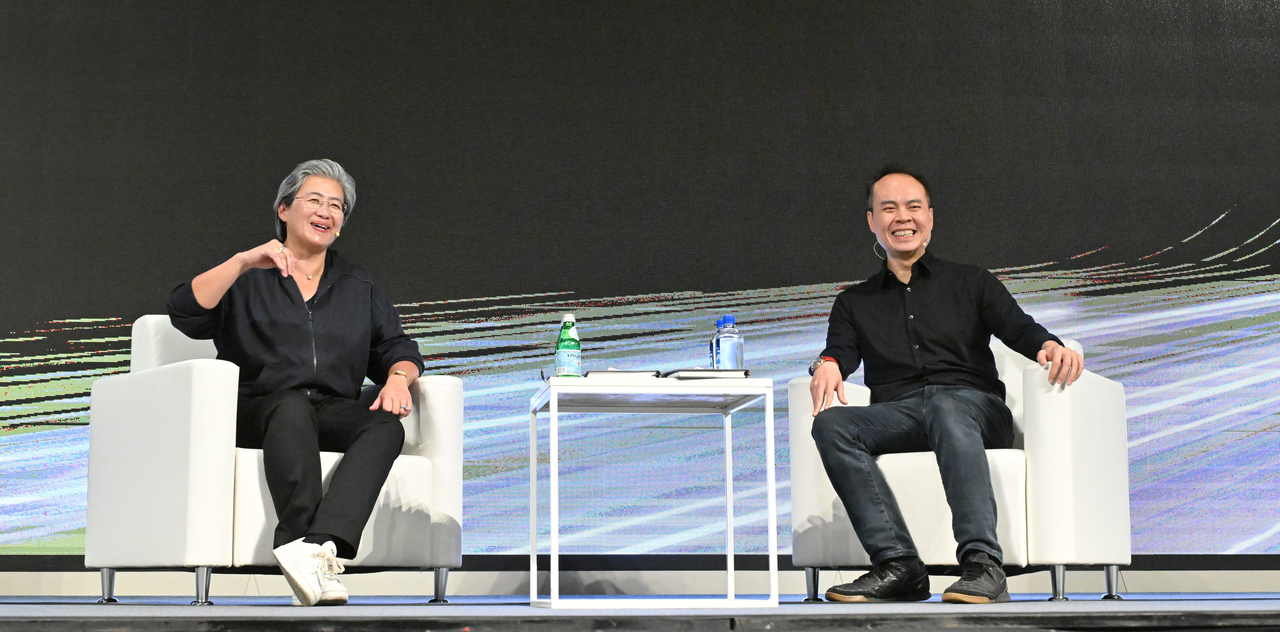
Su later joined Jack Huynh, senior vice president of AMD’s computing and graphics group, at Gamer Day to showcase the company’s gaming technology and meet Korean gamers.
herim@heraldcorp.com